
Office Renovation Without Disrupting Operations Singapore
We understand that upgrading a workspace in the Lion City feels like a massive challenge. Balancing business growth with daily tasks requires a smart, flexible strategy. Our team focuses on delivering a clear understanding of the logistics needed for success.
A phased office renovation allows your team’s workflow to continue while we improve the environment. We focus on specific zoning and after-hours schedules. This ensures your brand remains active and productive during the change.
Managing disruption is our main priority. We use strict dust control and noise limits, protecting your staff’s focus. Our team provides this professional guide for a seamless transition in Singapore.
Key Takeaways
- Organize projects into distinct zones for workflow continuity.
- Perform high-noise tasks after business hours to minimize impact.
- Use temporary partitions for effective dust and debris suppression.
- Communicate daily progress clearly to all affected employees.
- Prioritize safety and health regulations in every construction area.
- Select builders familiar with managing live business environments.
Why Business Continuity Matters During Office Renovation
A well-planned office renovation strategy ensures that business continuity is maintained throughout the process. Business continuity is crucial during office renovation as any disruption to your operations can result in lost productivity, revenue, and reputation damage. We understand that maintaining business continuity is vital for your company’s success.
During an office renovation, various factors can impact your business operations. Noise, dust, and restricted access to certain areas can hinder employee productivity and affect client-facing activities. Moreover, renovation works can sometimes compromise the functionality of critical systems such as IT infrastructure and network connectivity.
To mitigate these risks, it’s essential to develop a comprehensive renovation plan that prioritizes business continuity. This involves assessing potential risks, identifying critical business functions, and implementing measures to minimize disruptions. By doing so, you can ensure that your business operations continue uninterrupted, even as your office undergoes renovation.
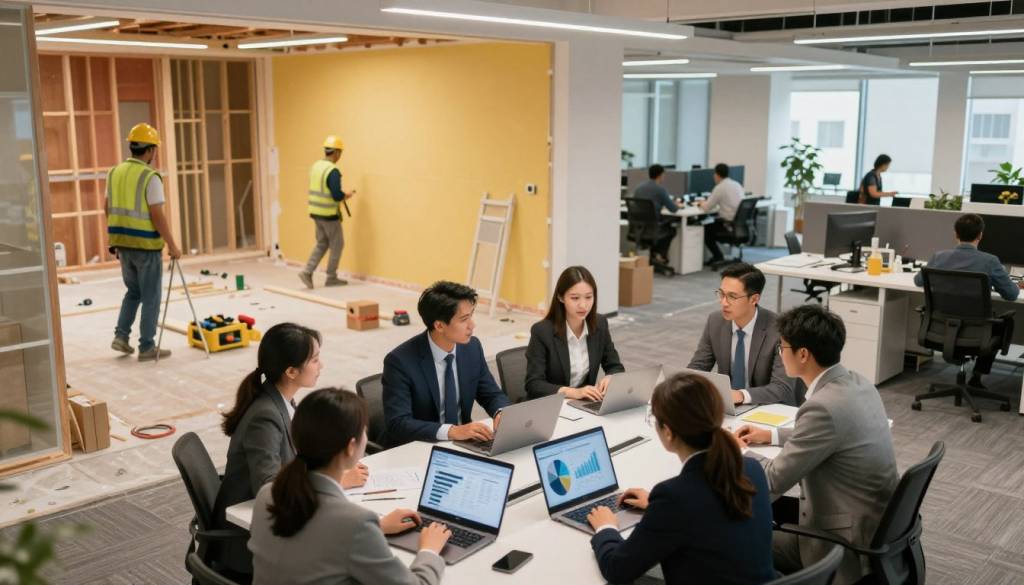
Maintaining business continuity during office renovation requires careful planning and execution. It’s not just about minimizing disruptions; it’s also about ensuring that your business remains operational and productive throughout the renovation process. By prioritizing business continuity, you can protect your company’s productivity, revenue, and reputation.
Pre-Renovation Assessment and Feasibility Planning
To ensure a smooth office renovation process, it’s essential to conduct a detailed assessment of your existing office layout and operational needs. This initial step helps identify potential challenges and opportunities for improvement, ensuring that the renovation enhances your workspace without disrupting critical business functions.
Evaluating Your Current Office Layout and Critical Zones
Assessing your current office layout is fundamental to a successful renovation. This involves mapping out the existing space, identifying critical zones such as server rooms, meeting areas, and high-traffic zones, and determining how these areas will be affected during the renovation.
We recommend creating a detailed floor plan that highlights these critical zones. This visual tool will help you and your renovation team understand the layout and plan the renovation phases accordingly.

Understanding Building Management Rules and Restrictions in Singapore
In Singapore, building management rules and regulations can significantly impact your renovation plans. It’s crucial to familiarize yourself with these rules to avoid potential delays or fines.
Some common restrictions include:
- Permitted working hours for renovation
- Noise level restrictions
- Requirements for debris disposal and waste management
- Access restrictions to certain areas of the building
| Restriction Type | Description | Typical Requirement |
|---|---|---|
| Working Hours | Permitted hours for noisy works | Monday to Friday, 9am-6pm |
| Noise Levels | Maximum allowable noise levels | Below 65 dBA during working hours |
| Waste Management | Proper disposal of renovation waste | Segregation of recyclables and non-recyclables |
Defining Non-Negotiable Operations During Renovation
Every business has operations that are critical to its daily functioning. Identifying these non-negotiable operations is vital to ensure that your renovation plans accommodate them.
Consider the following when defining these operations:
- Mission-critical functions: Operations that are essential to your business’s core activities.
- Client-facing activities: Areas or functions that directly interact with clients or customers.
- Revenue-generating activities: Operations that directly contribute to your revenue stream.
By understanding and planning around these critical operations, you can minimize the impact of the renovation on your business.
How to Renovate Office Without Disrupting Operations Singapore: The Phased Zoning Strategy
When it comes to office renovation in Singapore, minimizing operational impact is crucial for business continuity. One effective approach to achieve this is through the phased zoning strategy.
What Is Phased Zoning and Why It Works for Singapore Offices
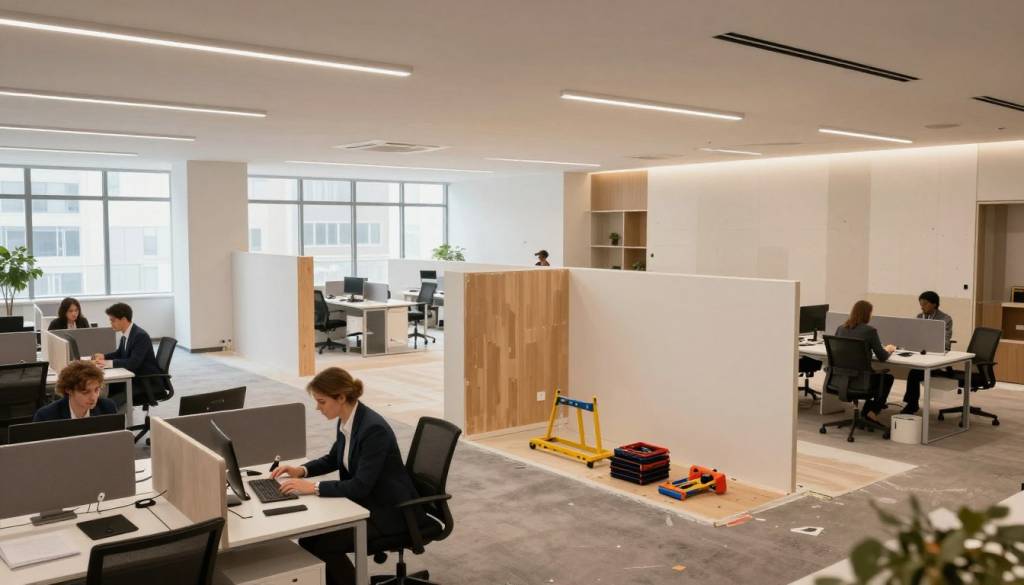
Phased zoning involves dividing the office into distinct zones and renovating them in a sequence that allows for continuous business operations. This strategy is particularly effective in Singapore offices due to the city-state’s fast-paced business environment and the need for uninterrupted productivity.
The phased zoning strategy works by isolating the renovation area from the rest of the operational spaces, thereby reducing the impact on daily business activities. It allows companies to continue their operations while the renovation is being carried out in a different zone.
Dividing Your Office into Logical Renovation Zones
To implement phased zoning effectively, it’s essential to divide your office into logical renovation zones. These zones should be determined based on factors such as:
- Departmental functions
- Workflows and operational dependencies
- Physical layout and accessibility
For instance, you might designate separate zones for different departments, such as marketing, finance, and IT. Alternatively, zoning could be based on the physical layout, such as floor by floor or section by section.
Sequencing Work to Minimize Operational Impact
Once the zones are identified, the next step is to sequence the renovation work to minimize operational impact. This involves:
| Zone | Renovation Sequence | Operational Impact |
|---|---|---|
| Zone 1 | First phase of renovation | Minimal impact on core operations |
| Zone 2 | Second phase, after Zone 1 completion | Limited disruption due to sequential execution |
| Zone 3 | Third phase, following Zone 2 | Business operations continue uninterrupted |
By adopting the phased zoning strategy, businesses in Singapore can ensure that their office renovations are carried out efficiently without causing significant disruptions to their operations.
After-Hours and Weekend Work: Benefits and Trade-Offs
After-hours and weekend work have become a viable strategy for minimizing disruptions during office renovations in Singapore. This approach allows businesses to maintain their daily operations while the renovation work is carried out outside regular working hours.
However, it’s essential to weigh the benefits against the potential trade-offs. We will explore the scenarios where after-hours renovation makes sense for your business, the cost implications, and the necessary considerations for noise restrictions and permit requirements in Singapore buildings.
When After-Hours Renovation Makes Sense for Your Business
After-hours renovation can be beneficial for businesses that operate in environments where downtime is costly or where continuous presence is required. For instance:
- Financial institutions that need to maintain trading operations
- Healthcare facilities that require continuous patient care
- Customer service centers that operate 24/7
In such cases, after-hours work can help minimize the impact on business operations. However, it’s crucial to assess whether the benefits outweigh the additional costs associated with after-hours work.
Cost Implications and Contractor Availability
After-hours renovation typically comes with higher costs due to the need for additional labor and potential overtime pay for contractors. We need to consider these cost implications when deciding on after-hours work.
Some key factors to consider include:
- Increased labor costs for contractors working outside regular hours
- Potential need for additional staffing or security measures
- Impact on contractor availability and scheduling

Noise Restrictions and Permit Requirements in Singapore Buildings
Singapore has strict noise regulations and permit requirements for renovation work, especially in occupied buildings. We must ensure compliance with these regulations to avoid fines or work stoppages.
Some key considerations include:
- Obtaining necessary permits for after-hours work
- Adhering to noise level restrictions
- Coordinating with building management and neighboring tenants
By carefully evaluating these factors, businesses can make informed decisions about whether after-hours renovation is the right strategy for their office renovation project in Singapore.
Noise and Dust Control Measures for Occupied Offices
When renovating an occupied office in Singapore, controlling noise and dust is crucial for maintaining a productive work environment. Effective noise and dust control measures are essential to minimize disruptions and ensure the health and safety of employees.
To achieve this, we implement various strategies that cater to the unique challenges of occupied office renovations. These include physical barriers to contain dust and noise, advanced techniques for suppressing dust, and solutions to minimize sound transmission.
Site Hoarding and Physical Barrier Systems
One of the most effective ways to control dust and noise is by installing site hoarding and physical barrier systems. These barriers help to isolate the renovation area from the rest of the office, preventing dust and noise from spreading.
We use high-quality hoarding materials that are designed to be durable and effective. These barriers can be customized to fit the specific needs of your office renovation project.
Dust Suppression Techniques and Air Quality Management
Dust suppression is critical during office renovations. We employ various techniques to minimize dust generation, including the use of dust-suppressing sprays and misting systems.
Air quality management is also a top priority. We use advanced air filtration systems to remove dust particles and other contaminants from the air, ensuring a healthy environment for employees.
| Dust Suppression Technique | Description | Effectiveness |
|---|---|---|
| Dust-suppressing sprays | Chemical sprays that reduce dust generation | High |
| Misting systems | Systems that release a fine mist to suppress dust | Very High |
| Air filtration systems | Systems that remove dust particles from the air | High |
Acoustic Barriers and Sound-Dampening Solutions
Noise control is another critical aspect of office renovations. We use acoustic barriers and sound-dampening solutions to minimize noise transmission.
These solutions include acoustic panels, soundproofing materials, and strategic placement of noisy equipment to minimize disruption.
HVAC System Protection and Air Filtration
Protecting the HVAC system from dust and debris is essential during office renovations. We take measures to seal off air ducts and vents, and use protective covers to prevent contamination.
Advanced air filtration systems are also used to remove dust particles and other contaminants from the air, ensuring a healthy environment for employees.
By implementing these noise and dust control measures, we can ensure a safe and healthy work environment for your employees and minimize disruptions to your business.
Protecting IT Infrastructure and Network Systems During Renovation
When renovating your office, safeguarding your IT infrastructure is as crucial as the renovation itself. We understand that your network systems are the backbone of your business operations, and any disruption can have significant consequences.
To ensure business continuity, it’s essential to take proactive measures to protect your IT assets. This includes securing server rooms and data centers, managing cables effectively, and maintaining power supply continuity.
Securing Server Rooms and Data Centers
Server rooms and data centers are critical areas that require special attention during office renovations. Physical security is paramount to prevent unauthorized access, which could compromise your data or disrupt your operations.
- Ensure that server rooms are locked and access-controlled at all times.
- Use temporary barriers or relocatable secure enclosures if server rooms are within the renovation zone.
- Coordinate with your IT team to temporarily relocate critical servers if necessary.
Cable Management and Network Protection Protocols
Effective cable management is vital to prevent damage to your network infrastructure during the renovation. This involves organizing cables, protecting them from physical damage, and ensuring that network connectivity remains uninterrupted.
| Cable Management Strategy | Description | Benefits |
|---|---|---|
| Cable labeling and mapping | Identify and document all cables and connections. | Ease of maintenance and troubleshooting. |
| Cable protection | Use protective coverings or conduits for cables in renovation areas. | Prevents physical damage to cables. |
| Temporary network rerouting | Reroute network connections around renovation zones. | Maintains network continuity. |
Power Supply Continuity and Backup Systems
Ensuring power supply continuity is critical for maintaining business operations during a renovation. This involves having reliable backup power systems in place and planning for potential power outages.
We recommend:
- Installing uninterruptible power supplies (UPS) for critical IT equipment.
- Having a backup generator on standby in case of extended power outages.
- Regularly testing your backup power systems to ensure they are functioning correctly.
Maintaining Safe Access Routes and Emergency Exits
Ensuring safe access routes and emergency exits is crucial during office renovations in Singapore. We understand that a renovation project can be complex, but prioritizing safety is non-negotiable. Maintaining safe access is not just about compliance; it’s about ensuring the well-being of your staff and visitors.
Daily Access Pathways for Staff and Visitors
Clear and safe pathways are essential for daily operations. We recommend:
- Identifying alternative routes in advance
- Marking pathways clearly with signage
- Ensuring adequate lighting in all areas
By doing so, you can minimize disruptions and prevent accidents.
Fire Safety and Singapore Regulatory Compliance
Singapore has strict fire safety regulations that must be adhered to during renovations. Fire safety is not just a regulatory requirement; it’s a critical aspect of ensuring the safety of everyone in the building. We ensure that all renovation plans comply with the Singapore Civil Defence Force (SCDF) guidelines.
Coordinating with Building Management on Safety Protocols
Effective coordination with building management is key to maintaining safety protocols. We work closely with building management to:
- Review and comply with building safety regulations
- Ensure that all emergency exits are accessible
- Conduct regular safety audits during the renovation
By prioritizing safety and coordinating with building management, you can ensure a smooth and safe renovation process.
Critical Operations Continuity Plan
To minimize disruptions during office renovation, a well-structured continuity plan is essential. This plan ensures that your business remains operational and continues to serve its clients effectively throughout the renovation process.
Identifying Mission-Critical Functions and Departments
The first step in creating a critical operations continuity plan is to identify the mission-critical functions and departments within your organization. These are the areas that are essential to your business’s core operations and must continue to function during the renovation.
Key considerations include:
- Client-facing teams and their operations
- Core business functions, such as finance and HR
- IT infrastructure and data centers
- Any other department critical to your business continuity
Swing Space and Temporary Workstation Solutions
Once you’ve identified your critical functions, the next step is to arrange for swing space or temporary workstations. This involves finding alternative locations where your critical teams can operate without disruption.
Options to consider:
- Temporary office spaces within the same building or nearby
- Remote work arrangements for certain teams
- Co-working spaces or rental offices in the vicinity
Maintaining Client-Facing Operations and Meeting Spaces
For businesses that frequently interact with clients, maintaining client-facing operations and meeting spaces is crucial. This may involve setting up temporary meeting rooms or ensuring that certain areas of the office remain renovation-free.
Strategies to maintain client-facing operations:
- Designating specific meeting rooms or areas that are off-limits to renovation
- Creating temporary meeting spaces that are fully functional and professional
- Coordinating with clients to reschedule meetings if necessary
Technology and Communication System Redundancy
Ensuring that your technology and communication systems remain operational is vital. This involves having redundancy in your systems to prevent any single point of failure.
Key measures include:
- Implementing backup power systems and UPS for critical infrastructure
- Ensuring network redundancy and failover capabilities
- Having alternative communication channels in place
By focusing on these critical areas, businesses can ensure that their operations continue uninterrupted during the renovation process. A well-planned continuity plan is essential for minimizing the impact of renovation on your business and ensuring that you can continue to serve your clients effectively.
Delivery Scheduling and Lift Booking Coordination
To minimize disruptions during office renovation, it’s essential to coordinate material deliveries and lift bookings efficiently. This coordination is vital to maintaining the workflow and ensuring that the renovation process does not interfere with daily operations.
Coordinating Material Deliveries with Building Management
Coordinating with building management is a critical step in the delivery scheduling process. We work closely with building administrators to ensure that all deliveries are scheduled at times that minimize disruptions to both the renovation work and the normal functioning of the office.
This involves:
- Notifying building management in advance of delivery schedules
- Obtaining necessary permits and approvals for deliveries
- Ensuring compliance with building regulations regarding delivery times and access
Off-Peak Delivery Windows and Loading Bay Access
Utilizing off-peak delivery windows can significantly reduce congestion in common areas such as loading bays and corridors. By scheduling deliveries during less busy times, we can prevent bottlenecks and ensure a smoother renovation process.
Key considerations include:
- Identifying off-peak hours for deliveries
- Coordinating with contractors to adjust delivery schedules accordingly
- Ensuring that loading bay access is reserved during scheduled delivery times
Storage Staging Area Management
Effective management of storage staging areas is crucial for maintaining a clutter-free and safe working environment during the renovation. We designate specific areas for storing materials and equipment, ensuring that they are easily accessible yet out of the way of daily operations.
Best practices for storage staging area management include:
| Practice | Description | Benefit |
|---|---|---|
| Designating specific storage areas | Clearly marking areas for storage to prevent clutter | Maintains a safe and organized workspace |
| Regular inventory checks | Monitoring stored materials to ensure they are not excessive or obsolete | Reduces waste and saves on storage costs |
| Securing storage areas | Ensuring that storage areas are secure to prevent unauthorized access | Protects materials and equipment from theft or damage |
By implementing these strategies, we can ensure that the delivery and storage of materials are handled efficiently, minimizing disruptions and supporting a successful office renovation.
Stakeholder Communication Plan for Renovation Projects
Stakeholder communication plays a pivotal role in managing expectations and minimizing disruptions during office renovations. A comprehensive stakeholder communication plan is vital for ensuring that all parties are informed and aligned throughout the renovation process.
Effective communication helps in setting realistic expectations among employees, management, clients, and visitors. It involves not just conveying information but also creating a feedback loop to address concerns and queries promptly.
Internal Communication with Employees and Management
Internal communication is the backbone of a successful renovation project. It involves keeping employees informed about the renovation schedule, expected disruptions, and any changes to their work environment. Regular updates can be provided through:
- Weekly email updates
- Digital signage in common areas
- Team meetings and town halls
Management should also be kept in the loop regarding project timelines, budget updates, and any significant changes. This ensures that they are prepared to address any employee concerns and make informed decisions.
Keeping Clients and Visitors Informed
For businesses that continue to operate during the renovation, it’s crucial to keep clients and visitors informed about the renovation activities. This can be achieved by:
- Displaying clear signage at the entrance and around the renovation area
- Providing updates on the renovation timeline and any impact on service delivery
- Ensuring that client-facing areas remain unaffected or are minimally impacted
Weekly Update Protocols and Feedback Channels
Establishing a regular update protocol helps in maintaining transparency and trust among stakeholders. Weekly updates can be shared through various channels such as email newsletters, project management tools, or dedicated project websites.
It’s also essential to create feedback channels where stakeholders can raise concerns or ask questions. This can be through dedicated email addresses, online forms, or regular Q&A sessions.
Managing Expectations and Addressing Concerns
Managing expectations is critical to the success of any renovation project. By keeping stakeholders informed and providing regular updates, you can proactively address concerns and minimize misunderstandings.
Proactive communication helps in building trust and ensures that all parties are aligned with the project’s goals and timelines.
Week-by-Week Renovation Schedule Example
Effective office renovation in Singapore involves careful planning and execution, starting with a robust renovation schedule. A well-planned renovation schedule is essential for ensuring a smooth and timely renovation process. We will provide a week-by-week example schedule, illustrating the phased zoning approach and the various activities involved in each phase.
Weeks 1-2: Mobilization, Zone 1 Setup and Initial Works
During the first two weeks, we focus on mobilization and setting up the initial renovation zone. This includes:
- Conducting a thorough site assessment and safety briefing
- Installing site hoarding and safety barriers
- Setting up temporary facilities for workers
- Commencing initial demolition and removal works in Zone 1
Weeks 3-6: Zone 1 Major Works and Zone 2 Preparation
As we progress into weeks 3-6, the major renovation works in Zone 1 are executed, while simultaneously preparing Zone 2 for the upcoming works. Activities during this phase include:
- Structural modifications and electrical/mechanical installations in Zone 1
- Preparation of Zone 2, including site clearance and setup
- Coordination with building management for necessary permits and approvals
Weeks 7-10: Zone 2 Execution and Zone 3 Commencement
Weeks 7-10 see the execution of major works in Zone 2, while Zone 3 is prepared for renovation. Key activities include:
- Renovation works in Zone 2, including finishes and installations
- Initial works and setup in Zone 3
- Ongoing coordination with stakeholders and building management
Weeks 11-14: Final Zone Completion and Progressive Handover
In the final weeks, we complete the renovation works in the last zone and progressively hand over the renovated areas to the client. This phase involves:
- Completing any remaining works in the final zone
- Conducting thorough quality checks and snagging
- Progressive handover of renovated areas to the client
By following this week-by-week renovation schedule example, businesses can better understand the phased zoning approach and plan their operations accordingly.
| Week | Zone | Major Activities |
|---|---|---|
| 1-2 | Zone 1 | Mobilization, initial works, site setup |
| 3-6 | Zone 1 & 2 | Major works in Zone 1, preparation of Zone 2 |
| 7-10 | Zone 2 & 3 | Execution in Zone 2, commencement in Zone 3 |
| 11-14 | Final Zone | Completion and handover |
Disruption Control Checklist and Phasing Plan Template
Effective disruption control is the backbone of any successful office renovation project in Singapore. To help you achieve your renovation goals without disrupting your business operations, we provide a comprehensive Disruption Control Checklist and Phasing Plan Template.
Disruption Control Checklist
A disruption control checklist is essential for ensuring that all aspects of the renovation are carefully planned and executed. Our checklist covers three critical phases: pre-renovation, during renovation, and post-renovation.
Pre-Renovation Checklist Items
- Assess the current office layout and identify critical zones
- Define non-negotiable operations during renovation
- Establish a communication plan for stakeholders
- Coordinate with building management on safety protocols
During Renovation Monitoring Points
- Monitor noise and dust levels
- Track progress against the renovation schedule
- Ensure compliance with safety protocols
- Address any issues or concerns promptly
Post-Renovation Verification Steps
- Verify that all work has been completed to the required standard
- Conduct a thorough inspection of the renovated areas
- Obtain final certification and approval from relevant authorities
- Document lessons learned for future renovations
Phasing Plan Template
A well-structured phasing plan is crucial for minimizing disruptions during office renovations. Our template helps you define renovation zones, sequence work, and map out timelines and milestones.
Zone Definition and Sequencing
Divide your office into logical renovation zones based on business functions and operational requirements. Sequence the renovation work to minimize the impact on critical operations.
Timeline and Milestone Mapping
Create a detailed timeline that outlines the renovation schedule, including key milestones and deadlines. This will help you stay on track and ensure that the project is completed on time.
Stakeholder Responsibility Matrix
| Stakeholder | Responsibilities |
|---|---|
| Project Manager | Oversee the renovation project, ensure timely completion, and manage budget |
| Contractor | Execute the renovation work according to the plan and specifications |
| Building Management | Provide access, facilitate coordination with building services, and ensure compliance with building regulations |
By using our Disruption Control Checklist and Phasing Plan Template, you can ensure a smooth and successful office renovation project that meets your business needs and minimizes disruptions to your operations.
Conclusion
Renovating an office space in Singapore without disrupting daily operations is a complex task that requires meticulous planning and execution. By understanding the importance of business continuity and implementing strategies such as phased zoning, noise control measures, and stakeholder communication, you can minimize the disruption caused by office renovation.
Effective office renovation in Singapore involves careful consideration of various factors, including pre-renovation assessment, protection of IT infrastructure, and maintaining safe access routes. By following the guidelines outlined in this article, you can achieve a successful renovation outcome that meets your business needs.
For expert assistance with your office renovation, we invite you to contact our commercial renovation contractor in Singapore. You can also visit our portfolio to explore our previous work and discover how we can help you create a functional and efficient workspace.
FAQ
How can we ensure our business continues to operate smoothly during a major office renovation?
We prioritize business continuity by implementing a phased office renovation strategy. By dividing the project into stages, we ensure that only a portion of your office is under construction at any given time, allowing your team to remain productive in the remaining zones or a designated swing space.
What is phased zoning and why is it effective for Singapore offices?
Phased zoning involves dividing your office into logical sections that are renovated sequentially. This approach is highly effective because it minimizes the operational footprint of the construction. We coordinate the move of equipment and personnel to ensure that mission-critical departments always have a functional environment to work from.
Are after-hours works necessary, and what are the cost implications?
After-hours works and weekend shifts are often essential for high-impact tasks that generate significant noise or vibration. While labor costs for night work may be higher, this investment prevents the much larger cost of total business downtime. We handle all building management coordination to secure the necessary permits for extended working hours.
How do you manage noise and dust control when our staff is still in the building?
We employ rigorous noise control and dust control measures to maintain a professional atmosphere. This includes installing floor-to-ceiling site hoarding with acoustic properties to dampen sound and using HEPA-filtered air scrubbers to ensure indoor air quality remains high during the construction process.
What measures are taken for IT protection and network security during construction?
IT protection is a cornerstone of our planning process. We implement specialized physical barriers for server rooms to prevent dust ingress and coordinate with your IT team to ensure power supply continuity. Our technicians follow strict cable management protocols to prevent any accidental network outages while work is performed near data points.
How do we manage material deliveries without disrupting the rest of the building?
Successful logistics rely on proactive building management coordination. We handle the booking of service lifts and schedule material deliveries during off-peak windows. By managing a dedicated storage staging area, we ensure that hallways and common areas remain clear of debris and construction materials.
Will the renovation affect our fire safety compliance and emergency exit routes?
Absolutely not. We ensure that all site hoarding and temporary partitions are installed in strict accordance with Singapore’s fire safety regulations. Safe access routes and emergency exits are clearly marked and kept unobstructed at all times to ensure the safety of your employees and visitors.
What is a swing space and do we need one for our project?
A swing space is a temporary work area set up to accommodate staff whose permanent desks are within the active renovation zone. Depending on your office size and headcount, we can help you create a functional swing space within your current premises or suggest temporary workstation solutions to keep your team integrated.
How will our team be kept informed about the renovation progress?
We establish a robust stakeholder communication plan that includes weekly update protocols. This ensures that your management and employees are always aware of upcoming milestones, planned after-hours works, or changes in office traffic flow, allowing everyone to adjust their schedules accordingly.